Solo founder keyword page
Alternatives to Y Combinator for Solo Founders
Exact-match dataset based on your source CSV, converted to JSON and rendered as a searchable-style comparison table with source links and icon support where favicon assets exist.
Total options
100
High solo fit
46
Medium solo fit
34
Unique categories
52
100 alternatives in one table
Back to FounderCal| # | Option | Why it works | Best for | YC substitute | Watch-out |
|---|---|---|---|---|---|
| 3 |  Antler ResidencyVisit source for Antler ResidencyType: Venture builder High fit | Antler is unusually strong for solo founders because it can help with idea exploration, customer discovery, and cofounder matching before you are a full team. | Solo founders who are pre-idea or pre-team and want help finding the right company to build | Cofounder matching + structure + early capital | The environment is intense and strongly geared toward venture-scale outcomes, so it is not ideal if you want a calm, indie path. |
| 4 | Founder Institute CoreVisit source for Founder Institute CoreType: Pre-seed program High fit | It is accessible to very early founders, including solo founders, and gives a step-by-step framework for validating, launching, and fundraising. | Idea-stage founders who need accountability, milestones, and a global founder community | Curriculum + accountability + founder network | It is more of a disciplined founder-building program than a pure capital shortcut, so you still need to create your own momentum. |
| 5 | T TinySeedVisit source for TinySeedType: Accelerator High fit | For solo SaaS founders, TinySeed can be more relevant than YC because the advice is optimized for durable, profitable SaaS, not just venture theatrics. | B2B SaaS founders with some traction who do not want unicorn-or-bust pressure | SaaS mentorship + founder community + funding | It is narrow by design: best for SaaS, usually with real usage or revenue, and less useful for consumer or deeptech ideas. |
| 7 |  MassChallengeVisit source for MassChallengeType: Accelerator High fit | Its equity-free model is attractive for solo founders who want coaching, pilots, and ecosystem access without the pressure of a standard accelerator deal. | Founders who want a structured program without giving up equity | Mentorship + partner network + structure | It is not the same kind of direct brand-to-seed-fund pipeline that YC can be, so you need to drive fundraising yourself. |
| 16 | SA Startmate AcceleratorVisit source for Startmate AcceleratorType: Accelerator High fit | It gives solo founders a real operator-heavy network and a strong regional community that can substitute for the YC alumni effect. | Founders in Australia and New Zealand or those wanting that ecosystem | Mentors + community + investor exposure | It is best if your customers, investors, or talent base connect to ANZ. |
| 18 |  Entrepreneurs FirstVisit source for Entrepreneurs FirstType: Talent investor / venture builder High fit | It is one of the best-known paths for ambitious solo founders who want help finding the right company and possibly the right cofounder. | Exceptional individuals who are pre-team or still shaping the right idea | Cofounder matching + early conviction + talent density | It has a very high bar and a strong venture-scale expectation from the start. |
| 21 | FF Founders Factory Venture StudioVisit source for Founders Factory Venture StudioType: Venture studio High fit | For solo founders, a studio can replace the missing cofounder-like infrastructure with product, talent, and operational support from day one. | Idea-stage founders who want to build with a studio instead of going fully alone | Company building support + embedded operators + capital | You are not fully independent in the same way as a normal founder-led company; the studio model shapes the company. |
| 23 |  High fit | For solo founders at the exploration stage, SPC can be better than YC because it helps you think better before you commit to the wrong startup. | Pre-company builders who want a dense, high-trust peer network while exploring ideas | Founder community + conviction + early signal | It is not a classic accelerator with a heavy curriculum or guaranteed capital attached up front. |
| 24 | HF0 ResidencyVisit source for HF0 ResidencyType: Fellowship / residency High fit | It gives solo founders a strong ambient advantage: fast feedback, smart peers nearby, and constant exposure to high-agency builders. | Technical founders who want an immersive, in-person builder environment | Founder density + technical peers + investor attention | The in-person residency format is a strength if you can commit to it and a weakness if you cannot. |
| 25 | OF ODF Founder FellowshipVisit source for ODF Founder FellowshipType: Fellowship High fit | It is useful for solo founders before full commitment because it helps convert vague ambition into a stronger company thesis or a clear no. | Idea-stage founders who need a fast, focused way to pressure-test whether to start something | Exploration structure + founder peer group | It is lighter on direct capital than YC-style accelerators, so you still need a separate funding path if you proceed. |
| 27 |  Deep Science VenturesVisit source for Deep Science VenturesType: Venture creator High fit | It is a very strong alternative for solo deeptech founders because it helps create a venture from scientific insight instead of expecting a polished startup already. | Scientist and engineer founders exploring deeptech, biotech, climate, or advanced R&D startups | Idea generation + company formation support + deeptech network | Timelines are longer, markets are harder, and the model is thesis-driven rather than founder-autonomy-first. |
| 28 | CV Carbon13 Venture BuilderVisit source for Carbon13 Venture BuilderType: Venture builder High fit | It is tailored for founders who care about climate impact and need structured help turning that mission into a fundable company. | Climate founders who want help shaping a venture from a real emissions problem | Cofounder matching + venture design + climate network | It is narrow by design and best for climate categories that benefit from specialized support. |
| 34 |  Startup Wise GuysVisit source for Startup Wise GuysType: Accelerator High fit | It is a practical Europe-oriented option for founders who want support and access without needing to relocate to the US startup circuit. | B2B, SaaS, fintech, and CEE-focused startups | Mentorship + regional network + early structure | It is strongest if your market, team, or fundraising path aligns with Europe and its sector focus. |
| 35 |  Start-Up ChileVisit source for Start-Up ChileType: Public accelerator High fit | It can be a smart solo-founder move when you want a structured program and a new market entry point instead of chasing only US-based capital. | Founders open to Latin America who want public-backed startup support | Capital + community + international landing pad | Program requirements and geography matter, so it is not a universal fit. |
| 37 | SF STATION F FightersVisit source for STATION F FightersType: Campus program High fit | It is a good alternative for solo founders who do not fit the standard elite-network startup mold but still want serious support. | Unconventional founders who need support from idea to MVP | Accountability + community + early founder support | The strongest benefits are tied to the STATION F ecosystem and its in-person context. |
| 40 | ZV Zinc Venture BuilderVisit source for Zinc Venture BuilderType: Venture builder High fit | For solo founders who care about impact-led markets, Zinc can be better than YC because it helps build around a problem, not just a trend. | Mission-driven founders in health, environment, and societal problem spaces | Idea development + expert network + venture creation | It is thesis-driven and not a free-form program for any kind of startup. |
| 44 | BG Bethnal Green VenturesVisit source for Bethnal Green VenturesType: Accelerator / investor High fit | It is a stronger cultural fit than YC for founders who want an impact lens and a values-aligned network from day one. | Tech-for-good and impact-focused startups | First capital + mission-aligned network + mentorship | If your company is not clearly impact-oriented, the fit is weaker. |
| 46 | ED EIT Digital Venture ProgrammeVisit source for EIT Digital Venture ProgrammeType: Public / EU program High fit | It helps solo founders turn a technical idea into something more investor- and market-ready without needing immediate private capital. | European digital and deeptech founders at early stage | Training + European network + structured validation | It is tied to European program cycles and not as plug-and-play as a permanent private accelerator. |
| 48 | T TechscalerVisit source for TechscalerType: Public founder support High fit | It is a practical replacement for the structure and peer environment solo founders often need long before they are accelerator-ready. | Founders in Scotland who want mentors, programs, and community support | Community + coaching + local startup infrastructure | It is region-specific and less useful if Scotland is not part of your plan. |
| 51 | SE Scottish EDGEVisit source for Scottish EDGEType: Competition / grant High fit | It is a realistic alternative for solo founders who are too early for VC but need cash and a credible win to unlock the next step. | Scottish founders who need early non-dilutive funding and validation | Early capital + external validation | Competition-style funding is episodic and usually geography-limited. |
| 53 | B BayStartUPVisit source for BayStartUPType: Regional startup support High fit | For solo founders outside the biggest startup hubs, a strong regional platform can be more practical than chasing a global accelerator too early. | Early founders in Bavaria who need training, pitch prep, and local access | Founder education + local network + early credibility | Its value is heavily tied to the regional ecosystem. |
| 54 | DL Dogpatch LabsVisit source for Dogpatch LabsType: Ecosystem hub High fit | It can replace a big piece of YC's social and serendipity value for solo founders who mainly need people, not just money. | Founders in Ireland who want community, events, and partner-led programs | Community + intros + startup environment | It is a platform, not a one-size-fits-all accelerator with automatic funding. |
| 55 | SS Startup SG FounderVisit source for Startup SG FounderType: Public grant program High fit | For eligible solo founders, it is a very practical YC alternative because it combines early support with a government-backed startup pathway. | First-time founders in Singapore who want mentorship plus startup capital | Mentors + early capital + official credibility | Eligibility rules and local requirements are part of the deal, so it is not portable globally. |
| 56 | S SCOREVisit source for SCOREType: Mentorship network High fit | It is one of the cheapest ways for a solo founder to stop building in a vacuum and start getting regular outside perspective. | Founders who want free guidance from experienced operators | Mentorship + accountability | You are trading brand and capital for accessibility, so mentor matching quality matters a lot. |
| 57 | S SBDCVisit source for SBDCType: Public business support High fit | It helps solo founders get basic execution support without paying for consultants or waiting until they look venture-ready. | US founders who need local coaching, planning help, and referrals to grants or lenders | Business coaching + local network + practical support | It is generally more small-business oriented than high-growth startup oriented. |
| 61 | K KivaVisit source for KivaType: Alternative finance High fit | It is a practical option when you need a first tranche of cash for a real business but are nowhere near venture funding territory. | Very early founders who need small amounts of startup capital | Initial funding without giving up equity | The amounts are modest, so it is not a replacement for venture-scale startup financing. |
| 62 | F FounderpathVisit source for FounderpathType: Revenue finance High fit | It is often a better fit than YC for solo SaaS founders who already have revenue and mainly need time, not a fundraising story. | SaaS founders with recurring revenue who want runway without dilution | Capital for growth | It only makes sense if revenue is real and reasonably predictable. |
| 69 | W WefunderVisit source for WefunderType: Equity crowdfunding High fit | It lets solo founders raise from users and supporters instead of relying only on elite seed networks. | Founders with a compelling public story or community-driven product | Demo day + fundraising distribution | Crowdfunding campaigns are real marketing projects and can consume huge amounts of founder time. |
| 70 | R RepublicVisit source for RepublicType: Equity crowdfunding High fit | It can replace some of YC's signaling value by turning a startup raise into a public campaign with community buy-in. | Founders who want retail investor access and a public fundraising page | Fundraising reach + social proof | Compliance, communication, and campaign prep can be heavier than founders expect. |
| 72 | K KickstarterVisit source for KickstarterType: Crowdfunding / launch High fit | For solo founders with a sellable product, customers can be a better source of validation and funding than investors. | Consumer, hardware, and creator products that can be sold via preorders | Capital from customers + launch visibility | You still have to manufacture and deliver what you promise, which is where many campaigns break down. |
| 73 | I IndiegogoVisit source for IndiegogoType: Crowdfunding / launch High fit | It is a useful path when you need proof that people will buy, not just praise the idea. | Consumer and hardware founders testing demand before scaling production | Early capital + demand validation | Campaign success does not guarantee long-term company health or smooth fulfillment. |
| 74 | IH Indie HackersVisit source for Indie HackersType: Community High fit | It is one of the best substitutes for YC's emotional support layer if you are building alone and do not want to optimize for fundraising. | Bootstrapped software founders who want practical peer advice | Founder community + tactical learning | It gives community and ideas, not automatic capital or structured accountability. |
| 75 | M MicroConfVisit source for MicroConfType: Community / events High fit | For solo SaaS founders, MicroConf can be more directly useful than YC because the advice is grounded in running sustainable software businesses. | Bootstrap and SaaS founders who want focused playbooks and peers | SaaS community + operating advice | It is less useful if your whole strategy depends on fast VC fundraising. |
| 76 | PH Product HuntVisit source for Product HuntType: Launch platform High fit | A strong launch can replace some of the momentum YC normally manufactures by putting your product in front of engaged early users. | Internet products that need a visible public launch | Demo day exposure + early adopters | A launch spike is not product-market fit; you still need retention and a follow-up plan. |
| 77 | B BetaListVisit source for BetaListType: Launch platform High fit | It is a lightweight way for solo founders to get the first wave of real users without waiting for investor attention. | New software products that need beta users and waitlist growth | Early user acquisition + validation | The quality of traffic is early-adopter traffic, which may not match your eventual mainstream buyer. |
| 78 | F F6SVisit source for F6SType: Discovery platform High fit | It helps solo founders build a custom alternative to YC by finding dozens of smaller programs that match stage, location, or vertical. | Founders searching for accelerators, grants, competitions, and perks | Opportunity discovery + ecosystem access | It is a directory and application surface, not a program with a single curated experience. |
| 79 | SG Startup GrindVisit source for Startup GrindType: Community / events High fit | It is a practical way to reduce solo-founder isolation and start meeting operators, founders, and local investors. | Founders who need local chapters, introductions, and startup energy | Community + network | It is self-serve networking, not a structured accelerator. |
| 82 | SA Stripe AtlasVisit source for Stripe AtlasType: Founder stack / ops High fit | It replaces a chunk of the startup setup help many founders expect from an accelerator and gets solo founders operational faster. | Internet founders who need company formation and startup admin help | Incorporation + banking + legal ops | It helps you get set up, but it does not give community or distribution by itself. |
| 84 | NF Notion for StartupsVisit source for Notion for StartupsType: Founder stack / perks High fit | Solo founders need less tool sprawl, and Notion can replace several separate tools while keeping plans, roadmap, fundraising, and docs in one place. | Founders who want a cheap all-in-one workspace for docs, planning, and ops | Internal operating system + perks | It is operational leverage, not growth or capital leverage. |
| 88 | MF Microsoft for Startups Founders HubVisit source for Microsoft for Startups Founders HubType: Founder stack / cloud credits High fit | It is unusually founder-friendly because it can help very early teams lower infra costs before outside funding exists. | Solo founders who want credits and tooling without needing VC backing first | Perks + technical support + some startup network value | Credits reduce burn, but they do not validate the market. |
| 89 | AA AWS ActivateVisit source for AWS ActivateType: Founder stack / cloud credits High fit | For self-funded solo founders, cloud credits can be the most practical substitute for a small pre-seed round. | Startups running on AWS that need to lower cloud and AI infrastructure costs | Perks + technical runway | Credits are temporary and can hide weak cost discipline if you are not careful. |
| 90 | GC Google Cloud for StartupsVisit source for Google Cloud for StartupsType: Founder stack / cloud credits High fit | It can materially cut burn for solo technical founders and gives a structured way to access platform support while building. | Cloud-native or AI-first startups that prefer GCP | Credits + technical guidance | The value is highest only if your stack and roadmap align with Google Cloud. |
| 92 | MB Mozilla BuildersVisit source for Mozilla BuildersType: Builder community / support High fit | It is a strong alternative when you care about building in the open and want a values-aligned network rather than a pure venture machine. | Open-source and AI builders who want community and mission-aligned support | Peer group + support + credibility in open-source AI circles | It is not a generic capital-first program. |
| 94 | H HexaVisit source for HexaType: Startup studio High fit | A good studio can replace multiple YC functions at once: idea shaping, recruiting help, early funding, and day-to-day company-building support. | Software founders who want to build with a studio from idea stage | Cofounder-like support + studio services + capital | You are partnering with a studio's process and ownership model, not running fully solo in the usual sense. |
| 97 | A AtomicVisit source for AtomicType: Startup studio High fit | It is powerful for solo founders who want a built-in platform around recruiting, product, and fundraising instead of building that support system themselves. | Founders who want to start a company inside a venture studio model | Idea sourcing + capital + operating talent | This is a deeper partnership model than a normal accelerator, so founder independence is not the same. |
| 98 | PS Pioneer Square LabsVisit source for Pioneer Square LabsType: Startup studio High fit | PSL is strong when you are not yet a finished startup and need a serious partner for the first messy stage. | Very early founders, especially in the Pacific Northwest, who want help from idea to company | Venture creation + pre-seed support + founder network | Geography and studio fit matter, and it is not a fully founder-only path. |
| 1 |  TechstarsVisit source for TechstarsType: Accelerator Medium fit | It is one of the closest YC-style substitutes: structured cohorts, a large mentor bench, and a strong alumni network across many cities and verticals. | General software startups that want a big mentor and investor network | Capital + network + demo day | Program quality can vary by city and theme, and the equity trade can be hard to justify if the specific cohort is not a strong fit. |
| 2 | Medium fit | It gives early-stage founders structured support, a recognizable brand, and access to a broad global investor and founder network. | Pre-seed teams that want an investor-facing brand and global network | Capital + brand + investor network | It tends to reward founders who already think in venture-scale terms, so it is less useful if you are building a slower, bootstrap-first company. |
| 6 |  Alchemist AcceleratorVisit source for Alchemist AcceleratorType: Accelerator Medium fit | It is a strong YC substitute when the real bottleneck is getting into enterprise networks instead of just meeting seed investors. | Technical B2B startups that need enterprise customer access | Enterprise mentors + customer intros + investor access | Consumer founders usually get much less value because the whole machine is tuned for B2B and enterprise motion. |
| 8 | Plug and PlayVisit source for Plug and PlayType: Accelerator Medium fit | If your biggest problem is landing design partners or enterprise pilots, this can beat YC because the corporate network is the main asset. | B2B startups that need corporate pilots and industry introductions | Customer access + credibility + industry network | The quality of experience varies by vertical and hub, so the exact program matters a lot. |
| 9 | A AngelPadVisit source for AngelPadType: Accelerator Medium fit | It is known for being more intimate than mega-cohort programs, which can work well for solo founders who need sharp feedback instead of noise. | Founders who want a smaller, hands-on accelerator with tight mentorship | Mentorship + investor readiness + alumni credibility | It is highly selective, so it is not a broad-access option. |
| 10 |  Medium fit | ERA can replace the local network effects YC gives by plugging you into founders, angels, and operators in one dense ecosystem. | Pre-seed founders who want a strong New York network | Seed support + city network + mentor access | The value is highest if New York is strategically useful to your company. |
| 11 | StartXVisit source for StartXType: Accelerator Medium fit | It is a powerful alternative when you care more about high-quality peers and domain experts than a standard accelerator curriculum. | Stanford-adjacent or research-heavy founders who want a strong peer network | Peer network + credibility + mentorship | Its strongest value comes from its ecosystem ties, so it is less universal than YC. |
| 12 |  Berkeley SkyDeckVisit source for Berkeley SkyDeckType: Accelerator Medium fit | It combines ecosystem access, startup support, and a respected platform that can help solo founders look less alone in the market. | Early-stage founders who want Bay Area access plus university-linked support | Advisor network + investor exposure + credibility | You still need to create the velocity yourself; the badge helps, but it does not replace execution. |
| 14 | F FounderFuelVisit source for FounderFuelType: Accelerator Medium fit | It gives solo founders a classic accelerator shape without needing to chase only Silicon Valley routes. | Canadian founders who want structured mentorship and investor access | Program structure + mentor network + seed credibility | The geographic center of gravity matters, so it is strongest if Canada is part of your plan. |
| 15 | M MuckerLabVisit source for MuckerLabType: Accelerator Medium fit | It is attractive for solo founders who want deep attention rather than a giant batch and broad but shallow visibility. | Very early founders who want a selective, hands-on program | Close coaching + investor prep + trusted network | It takes very few companies, so access is the hardest part. |
| 17 |  SeedcampVisit source for SeedcampType: Accelerator / VC platform Medium fit | Seedcamp is a strong Europe-first alternative when you want early backing and a well-known network without defaulting to Silicon Valley. | European founders who want an early network and first institutional backing | Capital + European founder network + credibility | It behaves more like a top early-stage investor platform than a rigid curriculum-driven accelerator. |
| 19 | Medium fit | It can replace part of YC's signal and support stack, especially for AI or cloud-native founders who need deep product and infrastructure guidance. | Selected startups that need technical support, product help, and platform-level credibility | Technical experts + brand + tailored mentorship | Access depends on theme-specific batches and eligibility windows, not a constant always-open program. |
| 20 | FF Medium fit | It is useful when the missing piece is not just capital, but execution help across go-to-market, hiring, and partnerships. | Startups that want operator support and corporate-connected growth help | Hands-on support + partner network + investor access | Fit varies a lot by sector and by the specific partner ecosystem attached to the program. |
| 22 | a16z speedrunVisit source for a16z speedrunType: Accelerator Medium fit | It gives solo founders a strong brand halo, access to operators, and a concentrated founder network around frontier product categories. | AI, games, and technical startups that want a high-signal Silicon Valley platform | Capital + elite network + visibility | It is built for very ambitious companies and can be a mismatch for quiet, steady, bootstrap-style businesses. |
| 33 |  StartupbootcampVisit source for StartupbootcampType: Accelerator Medium fit | It is broad enough to offer many vertical paths, so solo founders can pick a program aligned with their market instead of settling for a generic cohort. | Founders who want a themed accelerator with corporate links | Program structure + partner network + visibility | The exact cohort quality matters a lot more than the umbrella brand. |
| 36 | SF STATION F Founders ProgramVisit source for STATION F Founders ProgramType: Campus program Medium fit | For a solo founder, a dense startup campus can substitute for the energy and serendipity that YC batches create. | Generalist founders who want a strong startup campus and community in Europe | Founder community + partner access + credibility | It is more of an ecosystem platform than a direct YC-style seed-fund machine. |
| 39 | U UnternehmerTUMVisit source for UnternehmerTUMType: Venture support platform Medium fit | It can replace a lot of YC's network effect if your company benefits from Europe, Munich, industrial partners, or research links. | European founders who want a strong university, corporate, and startup ecosystem | Mentors + partners + talent access | It is most valuable when your strategy connects with that regional ecosystem. |
| 47 | N NDRCVisit source for NDRCType: Accelerator Medium fit | It gives solo founders a structured entry point into a real startup network without requiring a Silicon Valley route. | Founders with an Ireland or UK connection who want early-stage support | Mentors + investor access + local ecosystem | The geographic value is a big part of the offer, so it matters less if you are far outside its ecosystem. |
| 52 | GA German AcceleratorVisit source for German AcceleratorType: Market-entry program Medium fit | It can replace part of YC's US access benefit by helping startups navigate expansion with guided introductions and local knowledge. | Founders expanding internationally from Germany | Network + soft landing + market-entry support | It is better for companies already moving than for raw idea-stage founders. |
| 63 | C CapchaseVisit source for CapchaseType: Revenue finance Medium fit | It can replace an unnecessary dilution event when the business already has a viable revenue engine. | Subscription businesses that need to smooth cash flow or fund growth | Bridge capital + runway | It is financing, not free money, so weak unit economics will not be fixed by it. |
| 64 | C ClearcoVisit source for ClearcoType: Revenue finance Medium fit | It can be more relevant than YC if your company scales through paid acquisition and inventory rather than classic venture narrative building. | Ecommerce or consumer founders who need capital tied to sales growth | Growth capital | It is not a fit for every startup model and can be dangerous if growth is not healthy. |
| 65 | LC Lighter CapitalVisit source for Lighter CapitalType: Revenue finance Medium fit | It is designed for companies that already show some revenue traction and would rather fund growth from business performance than a priced round. | B2B SaaS founders who want non-dilutive capital | Runway without equity loss | It is not useful until the business already looks financially credible. |
| 67 | U UncappedVisit source for UncappedType: Alternative finance Medium fit | It gives solo founders another path to buy time and keep ownership if the business is already producing cash signals. | Revenue-generating startups that want financing without an equity round | Non-dilutive growth capital | Availability and product structure depend on region and business profile, so check the current terms carefully. |
| 68 | P PipeVisit source for PipeType: Alternative finance Medium fit | It can replace emergency fundraising when the problem is timing of cash, not the absence of a business model. | Recurring-revenue businesses that need financing options or embedded capital tools | Cash-flow support | It is a finance layer, not a founder network or accelerator community. |
| 71 | S StartEngineVisit source for StartEngineType: Equity crowdfunding Medium fit | It is useful when your edge is story, traction, or community appeal rather than a tight Silicon Valley network. | Startups that want a broad retail investor audience | Distribution for fundraising | Like all public raises, it demands sustained founder marketing effort. |
| 80 | S SaaStrVisit source for SaaStrType: Community / content Medium fit | It can replace a lot of the learning layer of YC for SaaS founders by giving direct access to operators and detailed growth content. | B2B SaaS founders who want tactical growth and fundraising knowledge | Playbooks + network + founder education | You have to self-direct; no one is forcing milestones on you. |
| 81 | W WellfoundVisit source for WellfoundType: Hiring / startup platform Medium fit | For solo founders, looking more real to candidates is often half the battle, and a strong profile can help attract early hires or collaborators. | Founders who need startup hiring visibility and a company profile | Talent access + startup credibility | It does not solve mentorship or funding by itself. |
| 83 | HF HubSpot for StartupsVisit source for HubSpot for StartupsType: Founder stack / perks Medium fit | It helps solo founders build a more serious sales and marketing stack without burning too much cash early. | Founders who need CRM and go-to-market tooling without full sticker price | Perks + GTM tooling | The value appears after you already have leads, pipeline, or customer conversations to manage. |
| 85 | GF GitHub for StartupsVisit source for GitHub for StartupsType: Founder stack / perks Medium fit | It lets solo technical founders get better tooling earlier, which can matter a lot when one person is building everything. | Technical founders who want discounted developer tooling and security features | Perks + dev infrastructure | It is most valuable once your dev workflow justifies the paid features. |
| 86 | CL Carta LaunchVisit source for Carta LaunchType: Founder stack / ops Medium fit | It replaces part of the legal and finance infrastructure accelerators often bundle through partners or alumni playbooks. | Founders who need cap table, equity, and formation admin support | Back-office startup ops | It reduces admin pain, but it does not create product traction. |
| 87 | BF Brex for StartupsVisit source for Brex for StartupsType: Founder stack / fintech Medium fit | For solo founders, better financial plumbing can remove a lot of hidden friction and make the company feel operationally serious earlier. | Startups that want modern finance operations, spend control, and startup-focused banking tools | Finance stack + startup perks | It is support infrastructure, not a substitute for finding customers. |
| 95 | HA High Alpha StudioVisit source for High Alpha StudioType: Startup studio Medium fit | It is a strong substitute when you want more than advice and would benefit from an actual company-building machine around you. | B2B SaaS founders who want hands-on product, GTM, and brand support | Embedded company building + network + capital access | It is best for enterprise software and not a generic founder path. |
| 96 | ES Expa StudioVisit source for Expa StudioType: Startup studio Medium fit | It can be more useful than a normal accelerator if your biggest weakness is turning a promising idea into a polished first product and company shape. | Product-minded founders who want design, product, and operating support early | 0-to-1 support + brand + network | Studios are selective and opinionated, so founder-studio fit matters a lot. |
| 99 | SI Science Inc.Visit source for Science Inc.Type: Startup studio Medium fit | It is a better substitute than a generic accelerator when the product category benefits from deep operator help in growth and consumer execution. | Consumer, marketplace, ecommerce, or mobile founders who want a studio partner | Growth expertise + studio resources + capital access | It is studio-led and category-driven, so it is not for every startup shape. |
| 13 | CD Creative Destruction LabVisit source for Creative Destruction LabType: Accelerator Niche fit | For deeptech solo founders, CDL can be more relevant than YC because the guidance is built around technical milestones and commercial translation. | Deeptech, science, and hard technical startups | Technical mentors + milestone rigor + credibility | It is not a good fit for lightweight SaaS or ideas without a genuine technical wedge. |
| 26 |  AI2 IncubatorVisit source for AI2 IncubatorType: Accelerator / incubator Niche fit | If you are building an AI startup, this is more targeted than YC because the help is closer to the actual technical and market problems. | Applied AI founders who want domain guidance and technical ecosystem support | AI mentorship + ecosystem access + early investor credibility | It is AI-specific, so general software ideas get less value. |
| 29 | NA NEXT AIVisit source for NEXT AIType: Accelerator Niche fit | It can beat a general accelerator if your main need is AI-specific feedback and an ecosystem that understands the category. | AI founders, especially with a Canada angle, who want a focused community and partner network | AI network + mentoring + credibility | The value is most obvious when your geography or network overlaps with its ecosystem. |
| 30 |  HAXVisit source for HAXType: Accelerator Niche fit | For hardtech solo founders, HAX is more relevant than YC because the bottlenecks are manufacturing, prototyping, and supply chain learning. | Hardware, robotics, and physical-product founders | Prototype support + supply chain access + hardtech investor network | It is not the right tool for pure software, and the physical-world complexity is real. |
| 31 |  IndieBioVisit source for IndieBioType: Accelerator Niche fit | It is one of the clearest examples where sector specialization matters more than generic accelerator prestige. | Biotech, synbio, and lab-heavy startups | Lab-oriented support + specialist mentorship + investor access | It is biotech-specific and not relevant for standard software companies. |
| 32 | SC Silicon CatalystVisit source for Silicon CatalystType: Incubator Niche fit | If you are building in semis, a generic accelerator will not solve your actual blockers. Silicon Catalyst is built around those blockers. | Semiconductor and chip founders who need industry access | Deep domain mentors + industry credibility + ecosystem access | It is one of the most niche options on the list, so it only matters if the company truly fits. |
| 38 | SF STATION F F/aiVisit source for STATION F F/aiType: AI program Niche fit | It is compelling for solo AI founders who want a targeted environment around model providers, infrastructure partners, and early AI peers. | AI startups that want a Europe-based AI ecosystem with big partner support | AI network + credits + strategic partners | It is very AI-specific and not a generic startup program. |
| 41 | EI Elemental ImpactVisit source for Elemental ImpactType: Climate investor / accelerator Niche fit | It is a strong alternative when the startup needs real-world deployment pathways, not just a generic accelerator brand. | Climate and industrial founders who need deployment partners and project credibility | Strategic capital + customer access + credibility | It is purpose-built for climate and hard infrastructure categories, so software-only founders should look elsewhere. |
| 42 | GL Greentown LabsVisit source for Greentown LabsType: Climate platform Niche fit | For solo climate founders, a strong physical ecosystem can replace the isolation that kills early progress. | Climate founders who need community, labs, and industry access | Founder community + facilities + partner network | It is more of a startup platform and community than a classic batch accelerator. |
| 43 | N NewlabVisit source for NewlabType: Innovation platform Niche fit | It is a good YC substitute when the company lives at the edge of software, hardware, and public-private systems. | Industrial, climate, mobility, and frontier-tech founders | Prototype ecosystem + partner access + credibility | It is less useful for straightforward internet startups with no physical-world component. |
| 45 | EB ESA BICVisit source for ESA BICType: Public incubator Niche fit | For space companies, domain credibility and access matter more than a general startup brand, and ESA BIC gives exactly that. | European space-tech founders | Non-dilutive support + technical credibility + ecosystem access | It is niche, geographically structured, and only relevant for space-related ventures. |
| 49 | RA Royal Academy of Engineering Enterprise HubVisit source for Royal Academy of Engineering Enterprise HubType: Fellowship / public support Niche fit | It is especially useful when a solo technical founder needs legitimacy, guidance, and a bridge from engineering work to startup execution. | Engineering-led founders in the UK | Expert validation + community + grant-like support | It is engineering-centered and UK-centered, not a general internet startup path. |
| 50 | LL Lloyd's LabVisit source for Lloyd's LabType: Sector accelerator Niche fit | In regulated sectors, customer access matters more than generic startup advice, and Lloyd's Lab is built around that need. | Insurtech founders who need direct access to the insurance market | Industry access + pilots + domain credibility | It is only relevant if insurance is at the center of the product. |
| 58 | S SBIR/STTRVisit source for SBIR/STTRType: Non-dilutive funding Niche fit | For the right company, this is better than YC because it can fund technical work without forcing an early equity trade. | US deeptech, biotech, and R&D-heavy startups | Capital without dilution | Applications take serious effort and the process moves slower than startup founders usually want. |
| 59 | NI NSF I-CorpsVisit source for NSF I-CorpsType: Public commercialization program Niche fit | It is excellent for solo technical founders who know the technology but need a rigorous process for testing whether anyone wants it. | Research-linked founders who need customer discovery discipline | Customer discovery + commercialization structure | It is best for research-derived innovation, not for ordinary app ideas. |
| 60 | EIC AcceleratorVisit source for EIC AcceleratorType: Non-dilutive funding Niche fit | It can replace an entire seed or pre-seed financing round for the right company and adds legitimacy with customers and investors. | European deeptech startups with ambitious technical risk and global upside | Large-scale funding + EU credibility | The application process is heavy, competitive, and often painful for founders who are not prepared. |
| 66 | W WayflyerVisit source for WayflyerType: Revenue finance Niche fit | It is often more useful than an accelerator if the company already knows how to grow and just needs cash to keep up with demand. | Ecommerce brands that need inventory and marketing capital | Working capital + growth financing | It is specialized for commerce, not a general founder-development program. |
| 91 | NI NVIDIA InceptionVisit source for NVIDIA InceptionType: Founder stack / AI ecosystem Niche fit | For AI founders, it can replace some of YC's platform advantages with a more technically relevant ecosystem. | AI, ML, and GPU-heavy startups | Technical ecosystem + credibility + go-to-market help | If your product is not meaningfully tied to AI or accelerated compute, the value drops fast. |
| 93 | 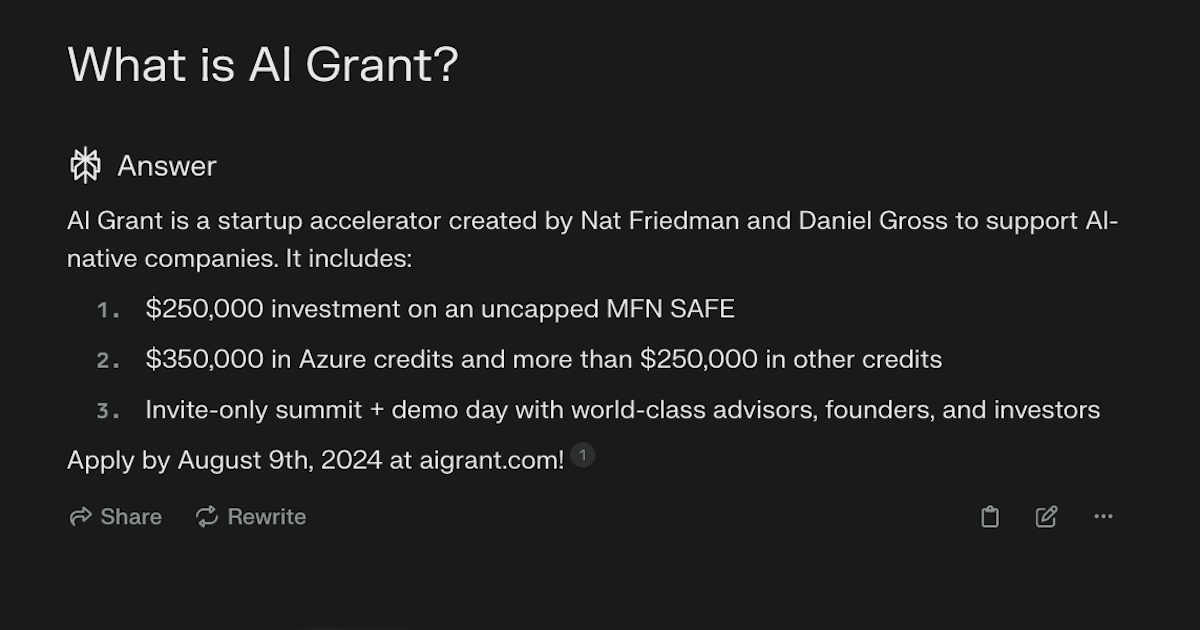 AI GrantVisit source for AI GrantType: AI accelerator / grant Niche fit | It is more targeted than YC for founders building AI-first products, especially when compute, advisors, and AI-native peers matter more than generic startup coaching. | AI-native startups or open-source AI builders | Capital + credits + AI-focused network | It is AI-only and batch timing matters; some offers are for grants while the accelerator runs separately. |
| 100 | OF Oracle for StartupsVisit source for Oracle for StartupsType: Founder stack / cloud support Niche fit | It can be a practical substitute for part of YC's perks stack, especially if you care about enterprise infrastructure or Oracle-connected buyers. | Startups that want OCI credits, enterprise cloud support, or Oracle ecosystem access | Perks + technical support + ecosystem connections | It is only compelling if the cloud, ecosystem, or customer angle genuinely fits your product. |